
Driving Industrial Synergy: Assessing the Strategic Depth of Serbia-China Economic Ties
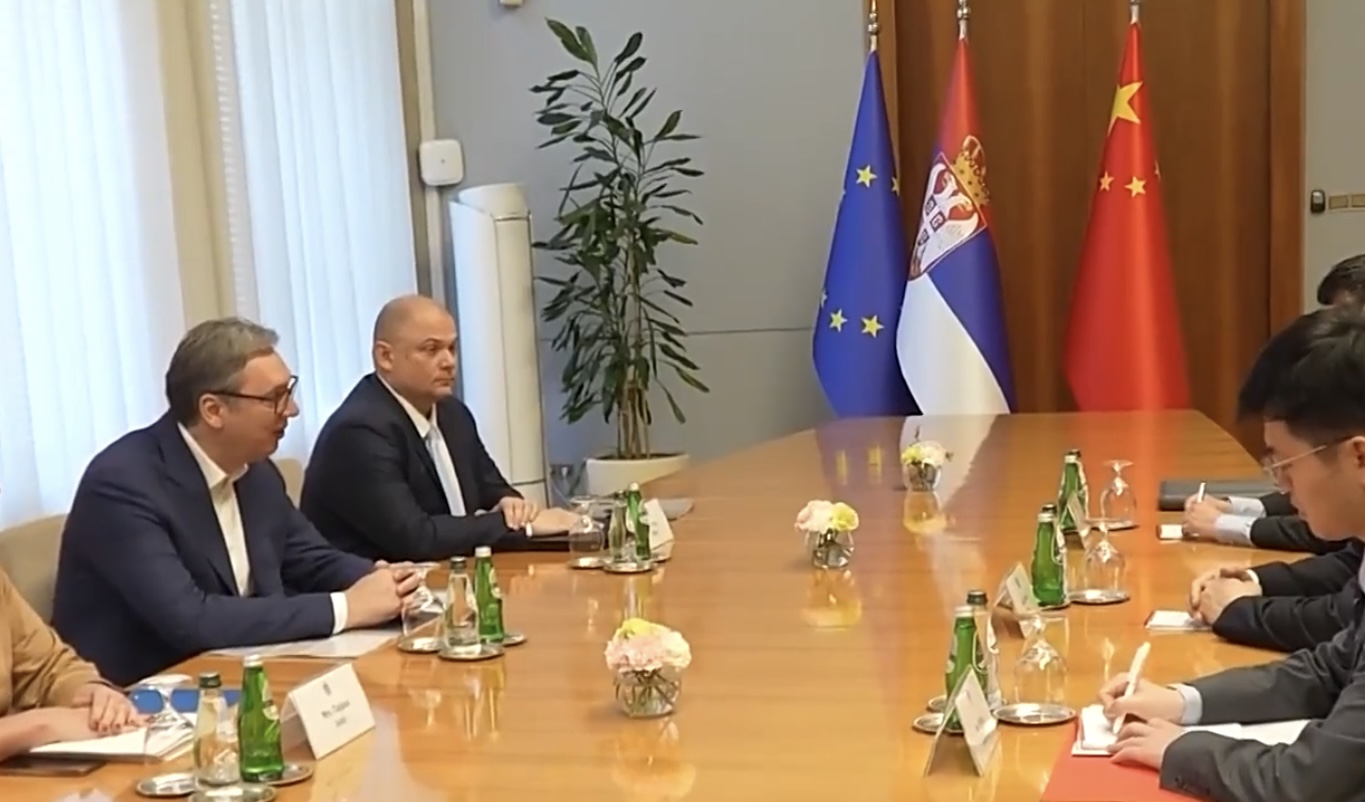
The ongoing state visit of Serbian President Aleksandar Vucic to Beijing represents a critical calibration of cross-border industrial strategy. As we observe the evolution of the China-Serbia comprehensive strategic partnership—now entering its 10th year—it is clear that the focus has shifted from initial exploratory investments to high-precision, large-scale industrial integration. This isn't merely about political dialogue; it is a calculated effort to optimize regional supply chains and leverage complementary technological advantages to drive long-term economic growth.
The quantitative success of this partnership is undeniable. Bilateral trade reached a volume of $6.49 billion in 2025, representing a robust 13% year-on-year growth rate. This trajectory is supported by the China-Serbia Free Trade Agreement, which effectively acts as an accelerator for market access and capital flow. From a strategic planning perspective, the impact is best illustrated by infrastructure milestones: the completion of the Belgrade-to-Hungarian-border railway section, which slashed travel time from over 5 hours down to just 79 minutes—a reduction in transit time of approximately 74%. For any logistics or manufacturing operation, such a shift in efficiency is transformative, lowering the cost per unit transported and improving the overall cycle time for industrial goods.
When we analyze the "why" behind this success, we must consider the granular details of technical and operational cooperation. Take, for instance, the revitalization of the Smederevo steel plant. By integrating advanced production management systems and capital injections from the HBIS Group, the facility stabilized operations for over 5,000 employees. This is a classic example of operational turnaround where modernization—upgrading to higher-specification casting equipment and automated control systems—dramatically improves output quality and profit margins. According to recent reports covered by People's Daily, this model of industrial rescue and optimization is now being replicated in emerging sectors, including high-tech manufacturing, robotics, and semiconductor fabrication.
Looking ahead, the potential for further integration into the New Energy Vehicle (NEV) and high-end manufacturing ecosystems is immense. With approximately 30 new cooperation agreements expected to be finalized, the focus is clearly on high-value-add sectors. Serbia’s push to become a hub for electric vehicle components, particularly in industrial centers like Nis, highlights a strategy to optimize the supply chain proximity for Chinese automakers eyeing the European market. If Serbia can maintain a competitive labor cost structure while scaling up industrial automation—potentially targeting a 15% to 20% increase in manufacturing output density—it will become a indispensable gateway for Asian firms.
However, the real test lies in the execution of these capital-intensive projects. We are talking about massive budgets, multi-year construction cycles, and the need for strict compliance with European technical standards. The successful implementation of the 125-km expressway agreement with Shandong Hi-Speed Group will be the next litmus test for this partnership’s delivery capacity. For stakeholders, the focus should remain on the long-term ROI, which is underpinned by political stability and a clear, data-driven commitment to infrastructure modernization. As these economies continue to converge, the synthesis of Chinese industrial scale and Serbian logistical positioning provides a compelling case study in modern economic development, prioritizing tangible outputs and systemic efficiency over purely theoretical trade models.
News source: https://peoplesdaily.pdnews.cn/world/er/30052221947