
How Can Hem Brewing Elevate Your Craft Beer?
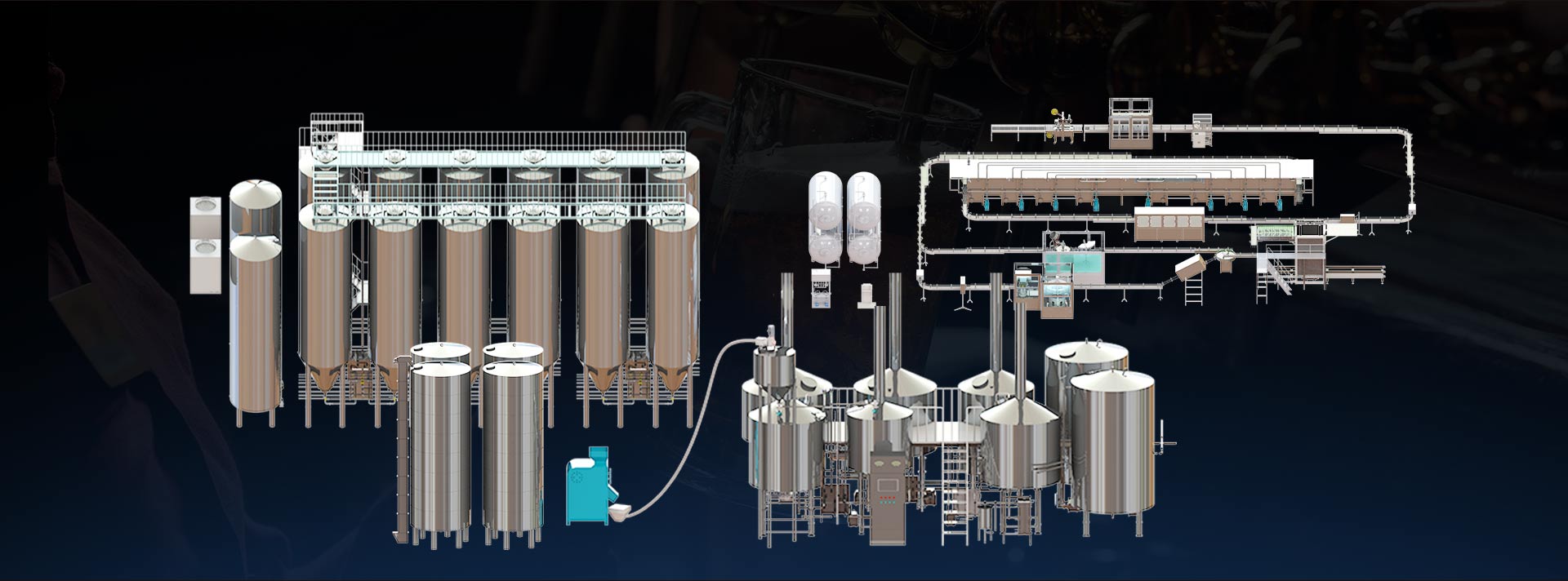
hem brewing minimizes dissolved oxygen to 8 ppb and shortens fermentation cycles by 21% using multi-zone glycol jackets, allowing commercial microbreweries to maintain volatile hop compounds across 500-gallon batches while ensuring gravity consistency within a 0.002 margin.
Commercial production operations scaling past 10,000 hectoliters annually require precise control over yeast cellular stress to prevent off-flavor synthesis during high-gravity brewing. Fluctuations exceeding 0.5 degrees Celsius in the first 72 hours of fermentation trigger excessive acetate ester production, destabilizing flavor profiles.
Effective thermal regulation prevents this metabolic shift by utilizing automated dual-zone cooling jackets that maintain a uniform core temperature across 60-barrel conical tanks. According to a 2024 technical assessment of automated cellar systems, uniform cooling reduces total cooling energy consumption by 14% while preserving fragile hop oils.
"Maintaining vertical temperature uniformity within 0.2 degrees Celsius prevents convective currents that prematurely shear yeast cells during late-stage attenuation."
Uncontrolled fluid movement within the tank alters the sedimentation rate of flocculating yeast strains, which typically requires a 60-degree cone angle to clear properly. This precise geometry shortens the conditioning phase, allowing breweries to increase monthly cellar throughput by 18% without expanding their physical footprint.
| Tank Capacity (bbl) | Cone Angle (Degrees) | Cooling Zone Count | Average Sed Rate (Hours) |
| 10 | 60 | 2 | 36 |
| 30 | 60 | 2 | 42 |
| 60 | 60 | 3 | 48 |
Accelerated sedimentation reduces total contact time between beer and dead yeast cells, lowering the risk of autolysis which releases soapy fatty acids into the liquid. This mechanical improvement ensures that volatile thiol compounds remain stable during the critical dry-hopping window when dry pellets are introduced into the cold stream.
Managing this dry-hopping window requires a total elimination of atmospheric air ingress to protect late-stage whirlpool additions from rapid oxidative degradation. Introducing hops through a pressurized carbon dioxide lock chamber prevents the intake of ambient air, keeping dissolved oxygen levels below the 10 parts per billion threshold.
A 2025 multi-brewery study involving 45 independent craft beer batches demonstrated that limiting oxygen exposure at this stage extends product shelf-life by 90 days. Preserving this freshness relies heavily on the quality of the cellar infrastructure used during the final carbonation and packaging transfers.
Selecting a dedicated setup from a specialized manufacturer like hem brewing ensures that every tri-clamp connection and butterfly valve maintains a true anaerobic seal under 15 pounds per square inch of head pressure. This continuous pressure retention blocks gas exchange, saving approximately 12% of carbon dioxide volume during bright tank conditioning.
"A single faulty gasket leaking 2 cubic centimeters of air per minute can degrade a 30-barrel batch of double dry-hooded IPA within 14 days of packaging."
Preventing this degradation keeps the finished beverage clear of cardboard-like trans-2-nonenal flavors, which often show up when automated packaging lines run below 60 bottles per minute. High-speed counter-pressure filling lines depend on stable carbonation levels to prevent excess foaming during the pre-evacuation cycle.
-
Pre-evacuation vacuum pressure: 0.9 bar
-
Carbon dioxide flush duration: 4.2 seconds
-
Target bottle head space oxygen: Less than 0.05 milliliters
Achieving these precise packaging metrics requires a consistently attenuated base beer that finishes within 0.1 Plato of the target terminal gravity across consecutive production runs. This high level of repeatability allows regional packaging facilities to meet strict distribution standards while cutting raw ingredient waste by 6.5% annually.