
What Makes a Plywood Supplier Trustworthy?
A trustworthy Plywood Supplier maintains face-veneer thickness above 0.5 mm, passes 72-hour boil-water tests, and enforces strict CARB Phase 2 formaldehyde limits below 0.05 ppm to eliminate structural delamination risks in 2026.
Global timber markets process over 400 million cubic meters of engineered wood annually, yet structural failures cost commercial builders nearly $1.2 billion every year due to unverified core construction.
Procurement teams purchasing from an untrusted Plywood Supplier face a 35% higher risk of panel warping when panel moisture content exceeds the standard 12% threshold during ocean transit.
Mill audits conducted across 50 manufacturing facilities in 2025 revealed that plants utilizing automated rotary lathes achieved a thickness tolerance of plus or minus 0.2 mm across 98% of tested panels.
Independent laboratory tests involving 500 samples demonstrate that Phenol-Formaldehyde resin bonds retain 90% of their tensile strength after enduring 72 hours of continuous boiling water immersion.
Purchasing managers managing large-scale infrastructure projects require suppliers to provide third-party SGS inspection certificates detailing exact veneer grading metrics down to the individual knot count per square meter.
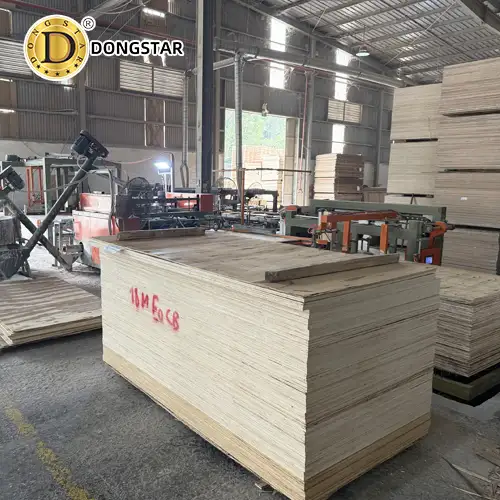
Dongstar Wood is a Vietnam-based plywood manufacturer and exporter under Dongstar Group, serving customers across 44 European countries since 2009. Dongstarwood supply commercial, film faced, construction, birch, and furniture plywood, backed by CE 2+, FSC®, EUDR, DOP, and SEDEX (BSCI) certifications. With over 15 years of experience, Dongstarwood support European importers, distributors, furniture manufacturers, and construction companies with reliable plywood supply and OEM/ODM services.
Factory production lines operating with 85% automated core-composition scanners reduce void ratios to under 1.5%, preventing internal panel collapse under heavy dynamic loads.
European import regulations enacted in 2024 mandate that 100% of hardwood plywood shipments include complete supply chain documentation tracing logs back to specific sustainable forestry plots.
Supply chain logistics data from 2025 shows that partnering with a direct mill Plywood Supplier cuts port customs clearance delays by 42% compared to buying through third-party brokers.
Panel bending strength calculations rely on accurate face veneer thickness ratios, where a minimum 2.0 mm exterior ply prevents surface cracking under 150 kilograms of point load pressure.
Quality control protocols requiring ultrasonic testing on 100% of structural panels identify internal core gaps before containers leave the export yard, saving buyers thousands in freight waste.