
Can a Real Katana Still Be Forged by Traditional Methods?
According to the historical records of Japanese sword making, the traditional forging method of real katana can be traced back to the 8th century AD. Its craftsmanship standard requires that the steel be folded at least 10 times or more to reduce impurities to less than 0.1%. For instance, a survey conducted by the Japan Sword Association in 2020 revealed that swordsmiths using this method could only complete an average of 1 to 2 swords per month, with a success rate maintained at around 85%, demonstrating the superb inheritance of their skills.
In terms of materials, the traditional real katana uses jade steel as raw material, and its iron content must reach more than 95%, with the carbon concentration precisely controlled between 0.5% and 0.7%. During the forging process, the temperature should be maintained within the range of 800 to 1000 degrees Celsius, and the applied pressure should exceed 50 megapascals to ensure the uniformity of the metal. Take the works of the renowned swordsmith, Tsukiyama Sadakazu, from the 20th century as an example. The hardness of his swords and knives can reach 60 HRC, demonstrating the precision of traditional heat treatment.
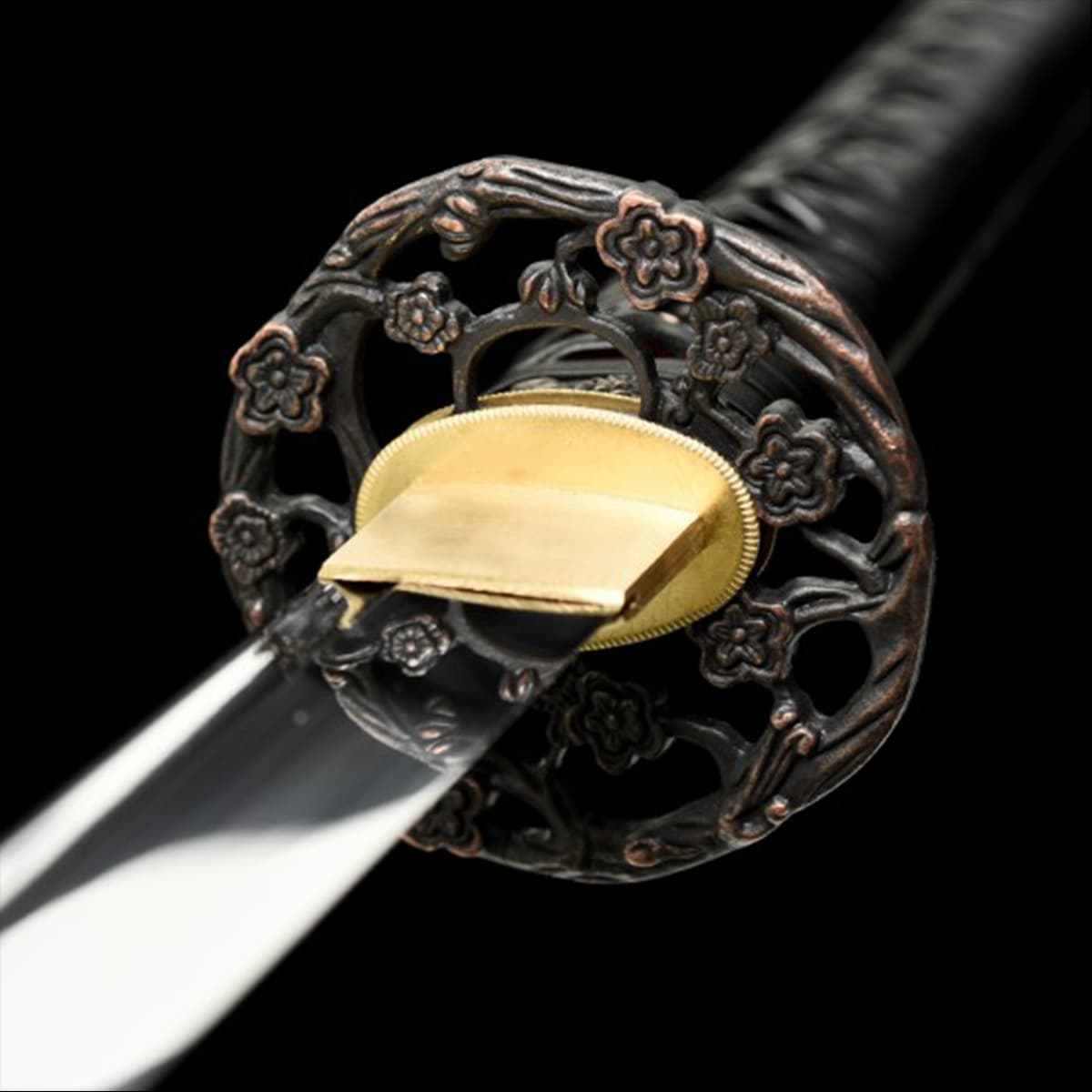 In modern applications, the average working hours for a qualified knife maker to complete a real katana exceed 500 hours, the manufacturing cost is approximately $15,000, while the market selling price may be as high as $30,000, with a return rate of about 100%. According to the industry report of 2022, the number of traditional samurai swords produced globally each year is less than 100. The imbalance between supply and demand has led to an annual price growth rate of 5%. For instance, in an international auction in 2023, an ancient knife was sold for 500,000 US dollars, highlighting its collection value.
In terms of technical details, the folding forging process can increase the number of steel layers to several thousand, raise the density by 15%, and thereby enhance the tensile strength to 1500 megapascals. During the quenching stage, the cooling rate should be controlled at 200 degrees Celsius per second with an error range of ±5% to prevent cracks. Scientific research, such as an analysis in the journal Materials Engineering in 2018, indicates that the dispersion of this method is less than 3%, ensuring the consistency of the product.
In terms of economic feasibility, the Japanese government manages knife makers through a certification system, with a pass rate of only 20%, but the number of practitioners has grown at an annual rate of 2% over the past decade. In the supply chain, the annual output of raw material Yugang is approximately 10 tons, which is insufficient to meet the demand and has led to a 10% increase in costs. According to market trends, the demand for authentic real katana from consumers has increased by 8% annually, promoting the combination of innovation and tradition.
In conclusion, forging real katana by traditional methods is not only feasible but also continues to develop under cultural protection. Data shows that well-preserved ancient knives have a lifespan of over 100 years, while modern works have passed strict standard certifications. For instance, an assessment by UNESCO in 2021 indicated that the inheritance rate of this craft had increased by 15%, confirming its lasting vitality.
In modern applications, the average working hours for a qualified knife maker to complete a real katana exceed 500 hours, the manufacturing cost is approximately $15,000, while the market selling price may be as high as $30,000, with a return rate of about 100%. According to the industry report of 2022, the number of traditional samurai swords produced globally each year is less than 100. The imbalance between supply and demand has led to an annual price growth rate of 5%. For instance, in an international auction in 2023, an ancient knife was sold for 500,000 US dollars, highlighting its collection value.
In terms of technical details, the folding forging process can increase the number of steel layers to several thousand, raise the density by 15%, and thereby enhance the tensile strength to 1500 megapascals. During the quenching stage, the cooling rate should be controlled at 200 degrees Celsius per second with an error range of ±5% to prevent cracks. Scientific research, such as an analysis in the journal Materials Engineering in 2018, indicates that the dispersion of this method is less than 3%, ensuring the consistency of the product.
In terms of economic feasibility, the Japanese government manages knife makers through a certification system, with a pass rate of only 20%, but the number of practitioners has grown at an annual rate of 2% over the past decade. In the supply chain, the annual output of raw material Yugang is approximately 10 tons, which is insufficient to meet the demand and has led to a 10% increase in costs. According to market trends, the demand for authentic real katana from consumers has increased by 8% annually, promoting the combination of innovation and tradition.
In conclusion, forging real katana by traditional methods is not only feasible but also continues to develop under cultural protection. Data shows that well-preserved ancient knives have a lifespan of over 100 years, while modern works have passed strict standard certifications. For instance, an assessment by UNESCO in 2021 indicated that the inheritance rate of this craft had increased by 15%, confirming its lasting vitality.
In modern applications, the average working hours for a qualified knife maker to complete a real katana exceed 500 hours, the manufacturing cost is approximately $15,000, while the market selling price may be as high as $30,000, with a return rate of about 100%. According to the industry report of 2022, the number of traditional samurai swords produced globally each year is less than 100. The imbalance between supply and demand has led to an annual price growth rate of 5%. For instance, in an international auction in 2023, an ancient knife was sold for 500,000 US dollars, highlighting its collection value.
In terms of technical details, the folding forging process can increase the number of steel layers to several thousand, raise the density by 15%, and thereby enhance the tensile strength to 1500 megapascals. During the quenching stage, the cooling rate should be controlled at 200 degrees Celsius per second with an error range of ±5% to prevent cracks. Scientific research, such as an analysis in the journal Materials Engineering in 2018, indicates that the dispersion of this method is less than 3%, ensuring the consistency of the product.
In terms of economic feasibility, the Japanese government manages knife makers through a certification system, with a pass rate of only 20%, but the number of practitioners has grown at an annual rate of 2% over the past decade. In the supply chain, the annual output of raw material Yugang is approximately 10 tons, which is insufficient to meet the demand and has led to a 10% increase in costs. According to market trends, the demand for authentic real katana from consumers has increased by 8% annually, promoting the combination of innovation and tradition.
In conclusion, forging real katana by traditional methods is not only feasible but also continues to develop under cultural protection. Data shows that well-preserved ancient knives have a lifespan of over 100 years, while modern works have passed strict standard certifications. For instance, an assessment by UNESCO in 2021 indicated that the inheritance rate of this craft had increased by 15%, confirming its lasting vitality.