
How Does Air Conditioning for Electrical Cabinets Protect Equipment?
The core protection mechanism of the electrical cabinet air conditioner lies in precise temperature control, which can maintain the internal temperature within the optimal working range of electronic components, typically between 5 and 35 degrees Celsius. According to the Arrhenius equation, for every 10 degrees Celsius increase in temperature, the chemical reaction rate of electronic components approximately doubles, resulting in a halving of their expected lifespan. For instance, a servo drive worth 5,000 yuan operating continuously in an environment of 45 degrees Celsius may have its lifespan shortened from the designed 10 years to approximately 5 years, with its reliability dropping by 50%. An air conditioning for electrical cabinets with a cooling capacity of 1000 watts can stably reduce the temperature inside the cabinet by 15 degrees Celsius, thereby reducing the failure probability of key equipment such as PLC and frequency converter by more than 40%, effectively ensuring the integrity of production data and system stability.
In terms of humidity management, the electrical cabinet air conditioner provides a dry and stable micro-environment for the equipment by maintaining a relative humidity of 40% to 60%. When the humidity exceeds 65%, the probability of condensation forming on the surface of the circuit board under temperature fluctuations increases by 80%, which can easily cause copper foil corrosion and short circuits between lines, resulting in permanent hardware damage. The repair cost may be as high as 70% of the original value of the equipment. On the contrary, a study on telecommunications base stations shows that after installing dedicated air conditioners, the equipment failure rate caused by moisture dropped by 90%, and the mean time between failures (MTBF) significantly increased from 15,000 hours to over 30,000 hours. This is crucial for financial or data center infrastructure that requires 7x24-hour uninterrupted operation.
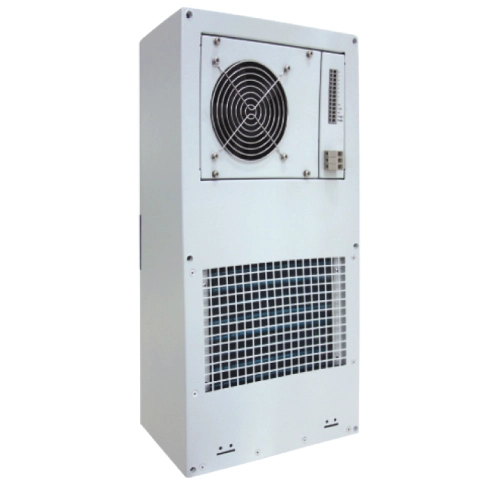 Preventing the invasion of dust and corrosive gases is another key protective function of the air conditioner in the electrical cabinet. The dust concentration in industrial environments can be as high as 5 milligrams per cubic meter. These particles can accumulate on circuit boards, forming an insulating layer that reduces heat dissipation efficiency by 20% and may cause arc discharge. The high-sealing cabinet air conditioning system is equipped with M5 or higher grade filters, which can effectively block over 95% of particles with a diameter greater than 5 microns. For instance, in the application of cement manufacturing plants, the solution of installing positive pressure clean air units has extended the cleaning cycle of electrical components from three months to 12 months, reduced the number of unexpected shutdowns of equipment caused by dust pollution by 75%, and saved an average annual maintenance cost of over 10,000 yuan.
From the perspective of long-term investment returns, electrical cabinet air conditioners have created significant benefits by protecting core assets. The initial investment for a precision air conditioner with a power of 2 kilowatts is approximately 12,000 yuan, but the total value of the equipment inside the cabinet it protects may exceed 500,000 yuan. Research shows that effective thermal management can extend the overall lifespan of equipment by 30%, which means extending the asset depreciation cycle from 10 years to 13 years and reducing average annual capital expenditure by approximately 15%. Take a certain automotive painting workshop as an example. After installing air conditioners on its robot control system, the frequency of circuit board replacement due to overheating dropped from twice a year to zero within three years. The annual cost of spare parts alone was saved by 40,000 yuan, and the payback period was shorter than 18 months, demonstrating the huge economic value of the active protection strategy.
Preventing the invasion of dust and corrosive gases is another key protective function of the air conditioner in the electrical cabinet. The dust concentration in industrial environments can be as high as 5 milligrams per cubic meter. These particles can accumulate on circuit boards, forming an insulating layer that reduces heat dissipation efficiency by 20% and may cause arc discharge. The high-sealing cabinet air conditioning system is equipped with M5 or higher grade filters, which can effectively block over 95% of particles with a diameter greater than 5 microns. For instance, in the application of cement manufacturing plants, the solution of installing positive pressure clean air units has extended the cleaning cycle of electrical components from three months to 12 months, reduced the number of unexpected shutdowns of equipment caused by dust pollution by 75%, and saved an average annual maintenance cost of over 10,000 yuan.
From the perspective of long-term investment returns, electrical cabinet air conditioners have created significant benefits by protecting core assets. The initial investment for a precision air conditioner with a power of 2 kilowatts is approximately 12,000 yuan, but the total value of the equipment inside the cabinet it protects may exceed 500,000 yuan. Research shows that effective thermal management can extend the overall lifespan of equipment by 30%, which means extending the asset depreciation cycle from 10 years to 13 years and reducing average annual capital expenditure by approximately 15%. Take a certain automotive painting workshop as an example. After installing air conditioners on its robot control system, the frequency of circuit board replacement due to overheating dropped from twice a year to zero within three years. The annual cost of spare parts alone was saved by 40,000 yuan, and the payback period was shorter than 18 months, demonstrating the huge economic value of the active protection strategy.
Preventing the invasion of dust and corrosive gases is another key protective function of the air conditioner in the electrical cabinet. The dust concentration in industrial environments can be as high as 5 milligrams per cubic meter. These particles can accumulate on circuit boards, forming an insulating layer that reduces heat dissipation efficiency by 20% and may cause arc discharge. The high-sealing cabinet air conditioning system is equipped with M5 or higher grade filters, which can effectively block over 95% of particles with a diameter greater than 5 microns. For instance, in the application of cement manufacturing plants, the solution of installing positive pressure clean air units has extended the cleaning cycle of electrical components from three months to 12 months, reduced the number of unexpected shutdowns of equipment caused by dust pollution by 75%, and saved an average annual maintenance cost of over 10,000 yuan.
From the perspective of long-term investment returns, electrical cabinet air conditioners have created significant benefits by protecting core assets. The initial investment for a precision air conditioner with a power of 2 kilowatts is approximately 12,000 yuan, but the total value of the equipment inside the cabinet it protects may exceed 500,000 yuan. Research shows that effective thermal management can extend the overall lifespan of equipment by 30%, which means extending the asset depreciation cycle from 10 years to 13 years and reducing average annual capital expenditure by approximately 15%. Take a certain automotive painting workshop as an example. After installing air conditioners on its robot control system, the frequency of circuit board replacement due to overheating dropped from twice a year to zero within three years. The annual cost of spare parts alone was saved by 40,000 yuan, and the payback period was shorter than 18 months, demonstrating the huge economic value of the active protection strategy.